
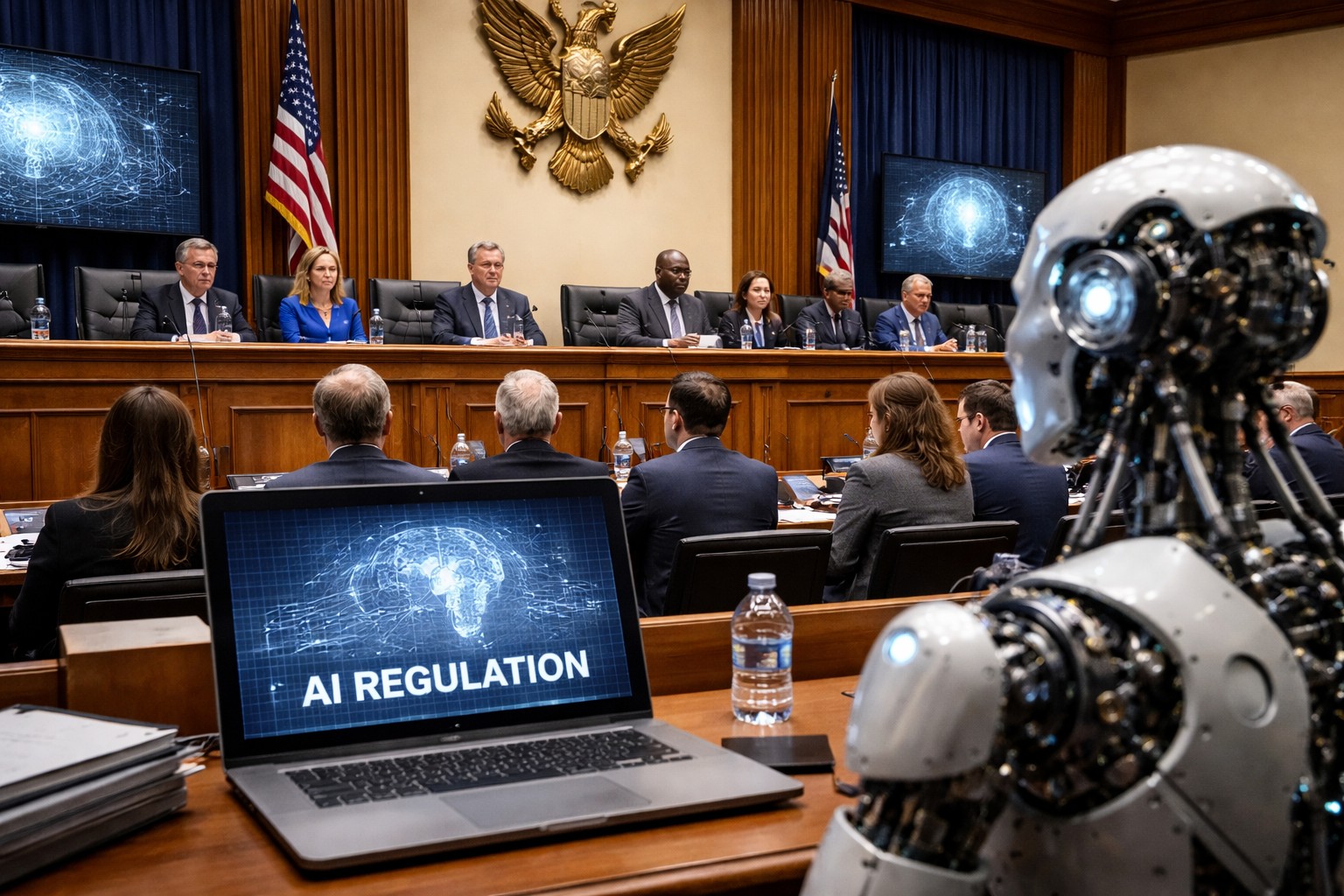
As artificial intelligence systems continue to expand across the U.S. economy, lawmakers in Washington are moving closer to establishing the country’s first comprehensive federal framework for AI oversight. In mid-October, members of Congress from both parties signaled growing alignment around baseline standards designed to balance innovation with public safety.
The renewed legislative push follows months of hearings with technology executives, academic researchers, labor advocates, and civil rights organizations. Lawmakers have focused on the increasing use of generative AI in hiring, healthcare, finance, and government operations—areas where automated decisions can carry significant real-world consequences.
Proposals under discussion aim to establish transparency requirements for high-risk AI systems, mandate impact assessments before deployment, and create clearer accountability when automated tools cause harm. While the bills vary in scope, there is broad agreement that AI systems used in critical sectors should meet higher standards than consumer-facing applications such as chatbots or creative tools.
Supporters of federal regulation argue that the absence of national standards has led to a fragmented landscape, with states adopting their own rules. California, Colorado, and New York have all enacted AI-related legislation in recent years, prompting concerns among businesses about compliance complexity and legal uncertainty.
Industry leaders have taken a more nuanced stance. While many technology companies support federal guidelines, they caution against overly prescriptive rules that could slow innovation or disadvantage U.S. firms competing globally. Several executives have advocated for a risk-based approach that adjusts requirements based on how AI systems are used.
International developments have also influenced the debate. The European Union’s AI Act, which establishes strict obligations for certain applications, has heightened pressure on U.S. policymakers to respond with a coherent national strategy rather than relying solely on voluntary commitments.
Civil rights groups have emphasized the need for enforceable safeguards, citing studies that show bias and inaccuracies in AI-driven decision-making. They argue that transparency alone is insufficient without meaningful enforcement mechanisms and avenues for individuals to challenge automated outcomes.
While the current proposals are unlikely to pass in identical form, congressional aides say momentum is building toward a consolidated framework in 2026. For now, the October discussions mark a significant step toward formalizing how AI is governed in the United States.
Sources:
https://www.reuters.com/world/us/us-lawmakers-ai-regulation-2025
https://www.nytimes.com/2025/10/14/technology/ai-regulation-congress.html
https://www.wsj.com/tech/ai/us-ai-policy-debate-2025
Author Profile

- Along with leading the team, Millard also works alongside different Fortune500 companies as their management Consultant/Financial Analyst, which shows his passion in helping other businesses grow.
Latest entries
 BusinessOctober 15, 2026What Are Trade-Offs In Business
 BusinessOctober 9, 2026What Is Medical Device Manufacturing Outsourcing
 BusinessOctober 3, 202619 Tips to Prepare for a Virtual Interview
 BusinessSeptember 27, 2026Best Forms Of Passive Income to Build Your Wealth