
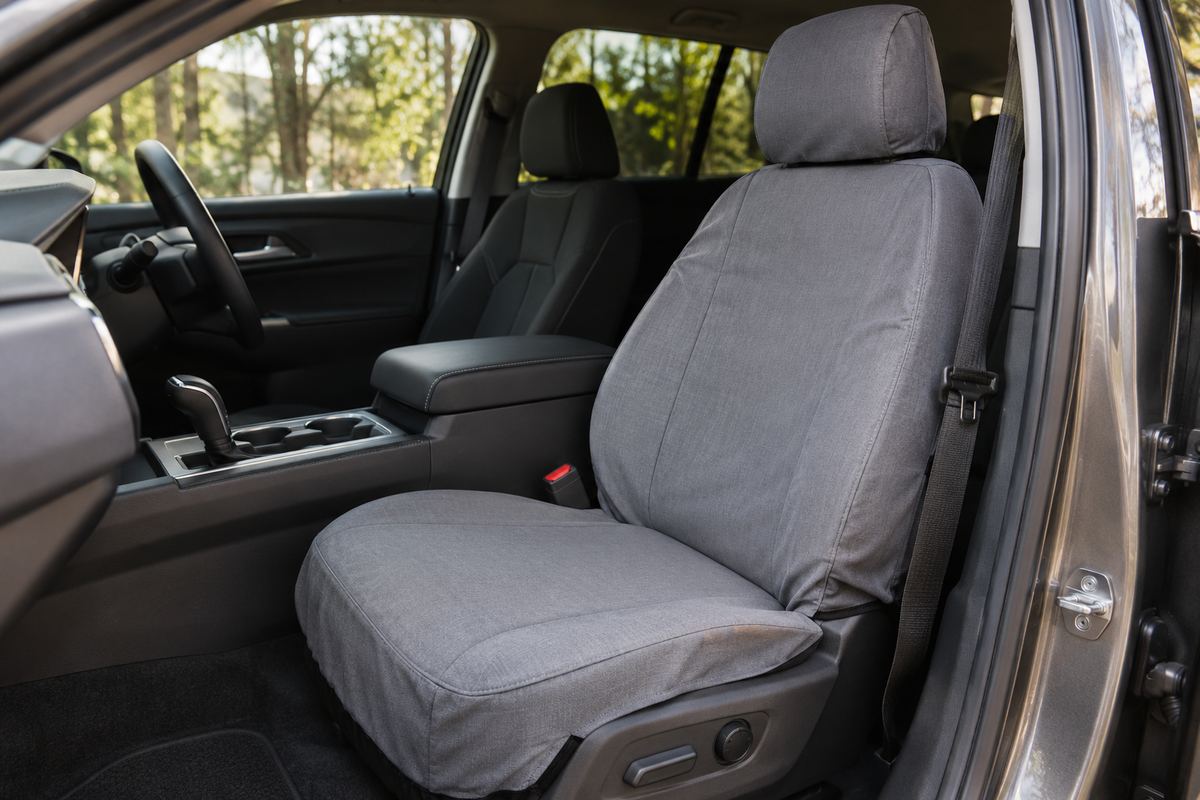
Car seat covers provide an additional layer of protection against spills, stains, scratches, sunlight, and everyday wear. However, choosing between custom-fit and universal seat covers can be challenging, especially when both options offer different advantages in terms of price, convenience, and performance.
While universal seat covers are designed to accommodate a wide range of vehicles, custom-fit covers are manufactured around specific seating configurations. Understanding how these differences affect upholstery protection can help vehicle owners make an informed purchasing decision.
What Are Custom-Fit Seat Covers?
Custom-fit seat covers are designed according to the make, model, year, and seating configuration of a particular vehicle. Their construction follows the shape and dimensions of the original seats, providing a more precise fit.
Unlike generic alternatives, vehicle-specific seat covers are designed to accommodate individual seat contours, headrests, armrests, and other integrated features.
Their primary advantages include:
- More consistent upholstery coverage
- Reduced fabric movement and bunching
- Greater material and design customization
- A more streamlined interior appearance
- Accommodation of vehicle-specific seat configurations
- Improved stability during everyday use
Custom-fit covers are particularly appealing to drivers seeking long-term upholstery protection.
What Are Universal Seat Covers?
Universal seat covers are manufactured to fit a broad range of vehicle seats rather than a specific vehicle model. They typically use adjustable straps, elastic edges, or flexible materials to accommodate different seat dimensions.
Their main advantages include:
- Lower initial purchase cost
- Wide availability
- Relatively simple installation
- Flexibility across compatible vehicles
- Practical short-term upholstery protection
However, because universal covers are not tailored to individual seat dimensions, the level of coverage and fit can vary considerably between vehicles.
Upholstery Coverage and Protection
The amount of upholstery covered is an important factor when comparing seat cover options.
Custom-fit covers generally follow the original seat contours more closely, reducing exposed areas where dirt, moisture, and friction may affect factory upholstery. This is especially beneficial for seat edges and side bolsters, which experience frequent contact when passengers enter and exit the vehicle.
Universal covers may leave gaps around seat corners, headrests, or armrests. Depending on their design, they may also shift during repeated use.
For drivers who prioritize comprehensive and consistent upholstery coverage, custom-fit seat covers generally offer an advantage.
Resistance to Everyday Wear and Tear
Vehicle seats are regularly exposed to friction from clothing, personal belongings, pets, and passengers. Over time, this contact can cause fabric thinning, discoloration, and surface damage.
A securely fitted seat cover helps maintain a protective barrier across frequently used areas.
Custom-fit covers are typically designed to minimize excessive movement, while universal covers may require occasional adjustments to maintain their position.
However, durability also depends heavily on material quality. A well-constructed universal cover made from durable fabric may outperform a poorly manufactured custom-fit alternative.
Protection Against Spills and Moisture
Both custom-fit and universal seat covers can provide effective protection against liquid spills when manufactured from appropriate materials.
Common moisture-resistant materials include:
- Neoprene
- Coated Cordura
- Waterproof polyester
- Treated canvas
- Vinyl
- Leatherette
Custom-fit covers may provide more consistent coverage because their design accommodates the shape of individual seats. Nevertheless, neither type guarantees complete waterproof protection unless the material, seams, and overall construction are specifically designed for that purpose.
For families, pet owners, and outdoor enthusiasts, material performance should be evaluated alongside fit.
Comfort During Everyday Driving
Seat cover movement can influence passenger comfort, particularly during long commutes and road trips.
Loose covers may develop wrinkles, folds, or uneven surfaces that require frequent adjustment. Custom-fit designs generally reduce these issues by following the original seat contours.
Other factors that influence comfort include:
- Fabric breathability
- Surface texture
- Material flexibility
- Thickness and cushioning
- Temperature regulation
- Secure installation
Drivers should select materials that complement their climate and daily driving habits, regardless of which cover type they choose.
Compatibility With Vehicle Features
Modern vehicles often incorporate multiple features directly into their seats. These may include adjustable headrests, armrests, electronic controls, heating elements, and safety systems.
Custom-fit seat covers can be designed around specific seating configurations, while universal covers may have more limited compatibility.
Before purchasing either option, confirm compatibility with:
- Seat-mounted airbags
- Passenger occupancy sensors
- Seat belt mechanisms
- Heated and ventilated seats
- Adjustable lumbar support
- Split-folding rear seats
Compatibility should always be verified using the vehicle manufacturer’s recommendations and the seat cover provider’s specifications. A custom fit alone does not guarantee safety compatibility.
Installation and Maintenance
Universal seat covers are often relatively straightforward to install, making them appealing to drivers seeking a quick interior protection solution.
Custom-fit covers may require more installation time because they are designed to fit individual seat components closely. However, once installed correctly, they may require fewer adjustments during regular use.
Maintenance requirements depend primarily on the material. Some fabrics can be wiped clean, while others require removal, washing, or specialized care.
Always follow the manufacturer’s installation and cleaning instructions to maintain the cover’s performance and appearance.
Custom-Fit vs. Universal Seat Covers: Side-by-Side Comparison
| Feature | Custom-Fit Seat Covers | Universal Seat Covers |
| Fit | Tailored to specific vehicle seats | Designed for multiple compatible vehicles |
| Upholstery coverage | Generally more precise | Varies depending on seat dimensions |
| Stability | Less likely to shift when properly installed | May require periodic adjustments |
| Appearance | Streamlined and integrated | May have visible folds or loose areas |
| Material options | Often more extensive | Varies by manufacturer |
| Installation | May require additional time | Generally straightforward |
| Initial cost | Typically higher | Typically more affordable |
| Long-term protection | Well suited for ongoing use | Suitable for basic or temporary protection |
| Feature compatibility | Vehicle-specific options available | Requires careful verification |
When Are Custom-Fit Seat Covers the Better Choice?
Custom-fit seat covers may be more suitable for:
- Drivers planning to keep their vehicles for several years
- Owners of new or high-value vehicles
- Families with young children
- Pet owners who frequently travel with their animals
- Contractors and commercial vehicle operators
- Drivers seeking a factory-style interior appearance
- Individuals who prioritize precise coverage and customization
The higher initial investment may be worthwhile when consistent protection and long-term durability are important considerations.
When Do Universal Seat Covers Make Sense?
Universal seat covers remain a practical option in certain situations, including:
- Temporary vehicle protection
- Limited accessory budgets
- Older vehicles requiring basic upholstery coverage
- Occasional passenger transportation
- Short-term vehicle ownership
- Drivers who need a quick protection solution
A quality universal seat cover can still provide useful protection when it fits securely and uses materials appropriate for the intended application.
Common Mistakes When Choosing Car Seat Covers
Regardless of the type selected, vehicle owners should avoid these common purchasing mistakes:
- Choosing covers based solely on price.
- Overlooking seat dimensions and configurations.
- Assuming all water-resistant fabrics are waterproof.
- Ignoring vehicle safety feature compatibility.
- Prioritizing appearance over material durability.
- Selecting fabrics that are difficult to maintain.
- Failing to secure covers according to installation instructions.
Evaluating these factors can help prevent unnecessary replacements and improve overall upholstery protection.
Which Type Offers Better Long-Term Value?
Universal seat covers generally require a smaller initial investment. However, frequent adjustments, inconsistent coverage, or premature replacement may affect their overall value.
Custom-fit seat covers typically cost more upfront but may provide better long-term value through improved fit, consistent coverage, and reduced movement.
Ultimately, the quality of materials, stitching, construction, and installation plays an equally important role in determining how effectively either option protects the vehicle’s interior.
Conclusion
Custom-fit seat covers generally offer better upholstery protection because of their precise fit, consistent coverage, and vehicle-specific construction. Universal seat covers, on the other hand, provide an affordable and convenient solution for drivers with basic or temporary protection needs.
The best choice depends on your budget, driving habits, vehicle configuration, and long-term ownership plans. By considering fit, material durability, moisture resistance, comfort, and compatibility, you can select seat covers that effectively protect your vehicle’s interior and meet your everyday needs.
Author Profile

- Along with leading the team, Millard also works alongside different Fortune500 companies as their management Consultant/Financial Analyst, which shows his passion in helping other businesses grow.
Latest entries
 TravelNovember 24, 2026Custom-Fit vs. Universal Seat Covers: Which Offers Better Protection?
 FeaturedNovember 24, 2026FraudFighter vs Grainger (2026): Where Should Your Business Buy Counterfeit Detection Equipment?
 FeaturedNovember 24, 2026Drafting Consultants vs. K & S Archiform: Architectural Drafting and 3D Design Services in California Compared
 FeaturedNovember 24, 2026Displays & Holders vs. Displays2go: American Acrylic Display Suppliers Compared for Stock and Custom Business Displays